


Welcome back, sports media consumers, to your favourite weekly column on the good and the bad that the sports media world has to offer here in Australia and abroad.
In this week’s column, one sports media website travels back to 2016, the NRL goes global for 2028, the Australian Financial Review reveals the most valuable NRL and AFL teams, and we look at the two different ways the Pat McAfee vs. the University of Utah story was reported.
Head to the fridge, grab your favourite beverage, put your feet up, and relax as I take you on a journey through the best and worst of sports media.
If I Could Turn Back Time
The Race that Stops a Nation, the Melbourne Cup, took place on Tuesday. So on Monday, we got all the usual articles about the horses, jockeys, and trainers running in the race. However, one website took us back to 2016.
I visit ESPN daily to keep up to date with the NBA score. I also think the Australian version of the website has become one of the best in the country for sports in Australia and overseas. Unfortunately, one error stared me in the face on Monday when I visited the site.
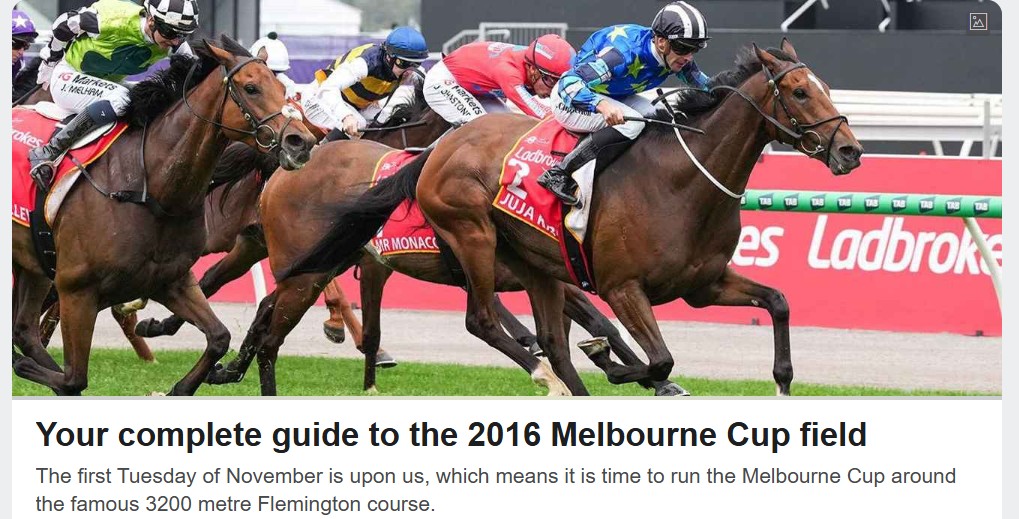
Yep, it was your complete guide to the 2016 Melbourne Cup field. At first, I thought it might be a throwback article, but here is what happened when I clicked the link.
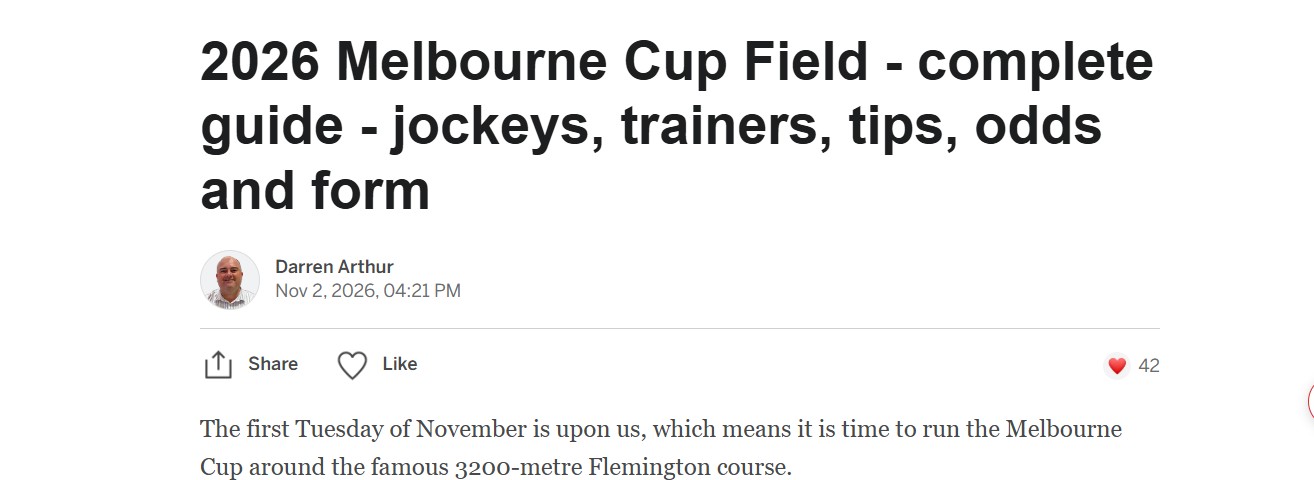
It was not a throwback article. Mistakes like this do happen; I have been guilty of them myself; however, this one was up on the website for at least one, maybe two hours. Because I was at work, I actually stopped checking whether the article headline had been fixed up during the evening. By Wednesday morning, it had been fixed.
Ultimately, it’s a reminder that even the biggest sports media organisations can make mistakes. It’s what happens afterwards, and the quality of the work being produced day in and day out, that matters. I feel that ESPN Australia has become the go-to place for sports news, whether it’s rugby league, AFL or even soccer. ESPN’s NRL journalist Isaac Issa is one of the best NRL journalists in the country, and he, along with others, has helped make ESPN.com.au what it is today.
The NRL Goes Global
On Triple M’s Rugby League World Cup (RLWC) Daily Podcast, Phillip ‘Buzz’ Rothfield revealed that Round One of the 2028 NRL season will go global, with a game in Tokyo, Japan.
The semi-retired ‘Buzz’ is reporting that glamour clubs, the Sydney Roosters and the Brisbane Broncos, will be on show in Japan. Though nothing is offical yet, and if it is true, then it is a great decision by the NRL, having the two best and most recognisable teams in the NRL flying the flag, as they did in Las Vegas in that first year.
Japan is typically a Rugby Union country; it makes the most sense for the NRL to go there next. I also think there is an opportunity for rugby league to grow its presence in a market where rugby union has traduitionally been the dominent code.
‘Buzz’ said this, and I agree with him that the NRL shouldn’t abandon Las Vegas, now that the multi-year deal is almost at an end. Pull it back to one game, or keep it as two, and then make sure there are games in Australia and New Zealand for a truly global round.
Ever since I was a kid, I’ve wanted the world to see rugby league and the spectacle it is, and now the sport is on the right track. I also think International Rugby League should capitalise on the success of last Sunday’s Tonga vs Samoa game, but I will go into that more on From The Sideline.
Pies and Panthers MVPs!
The Collingwood Magpies are the most valuable sporting club brand in Australia, beating the NRL’s Penrith Panthers by $4 million, according to Brand Finance Australia and the Australian Financial Review.
In the Article, Brand Finance executive chairman Mark Crowe said the AFL and NRL are juggernauts that continue to squeeze out commercial opportunities for other sports.
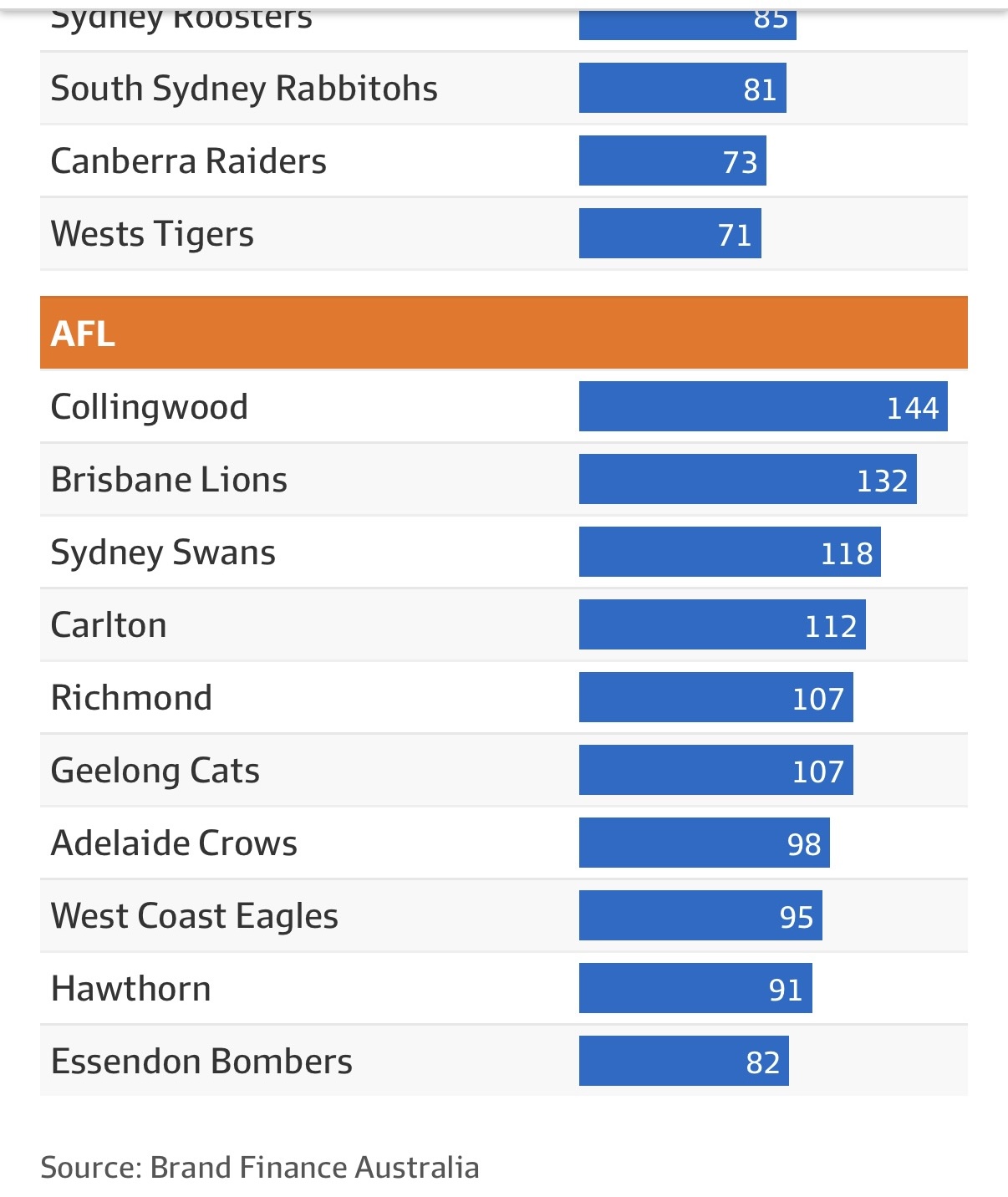
“Both codes are increasing in economic value driven by record media rights deals, while there is no evidence this growth is at the expense of each other,” Mr Crowe said.
Mr Crowe goes on to say that the Magpies are a great example of a club not reliant on on-field success for its brand value, which has over 100 years’ worth of history and heritage. He also added that with the Panthers missing the last two Grand Finals, it has started to bite on the Panthers’ brand strength, even though their value continues to grow.
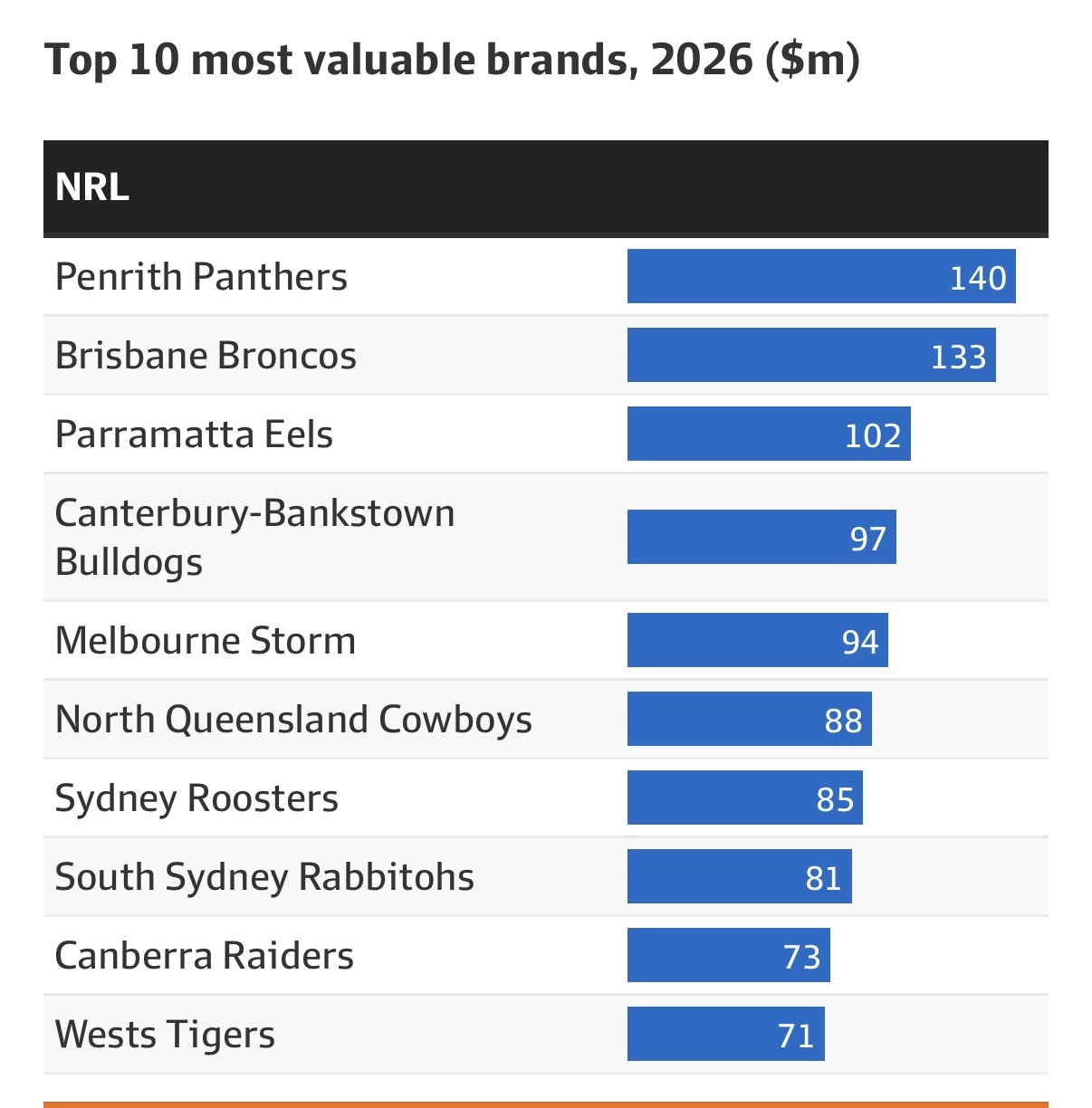
An interesting thing to note in the article is that the Newcastle Knights were big improvers, with their brand going from $46 million to $64 million, a 40.5 per cent jump.
Same Same, But Different
One of the big stories in American Sports Media is that Pat McAfee got a bit upset with the University of Utah over a post on the university’s social media pages in which students made comments about the former NFL punter, which upset the College GameDay host.
In the video, which has since been deleted, students called McAfee ‘corny’ and ‘creepy.’ He said that he wouldn’t have minded if the comments were made on the students’ personal social media accounts, but felt uncomfortable that they were posted on the university’s account. He also said “hopefully won’t see them again.”
He even mentioned the Charlie Kirk shooting, which actually happened at Utah Valley University, not the University of Utah.
The story continued to unfold as it was revealed that McAfee has been receiving death threats, with Front Office Sports reporting that the FBI had advised him to wear a bulletproof vest folloowing Kirk’s assassination.
I listened to and read coverage of this story, and two of my favourite sports media websites/podcasts covered it in very different ways.
Starting with Front Office Sports, they played it straight and did the line news-wise, like the ABC or the Sydney Morning Herald. Listen to Front Office Sports Senior Media Reporter Mike McCarthy speak at the six-minute mark about the story.
That is presented as a straight news story, with McCarthy talking about the incident while saying, “Pat is a very polarising public figure, and my sources tell me he regualry receives death threats.” That is very much a news-style approach, especially the use of thge phrase ‘my sources tell me.’
The other side of it is the opinion piece, which happens a lot on podcasts. Here are Bryan Curtis and David Shoemaker speaking about the McAfee incident on The Press Box Podcast about 31 minutes in.
This is the pefect opposite of what Front Office Sports did with their straight news version of the McAfee incident. Curtis, who in my opinion is one of the best podcast hosts and inteviewers in media, tells it how it is, saying that the comments are harmless, and that they ‘tweaked McAfee like he tweaks others.’
The other part that I like is that Shoemaker questions whether McAfee is being sincere about the distinction between the university’s social media account and the students accounts. Shoemaker asks, ‘Who does he think runs the university social media accounts?’ Which is a fair point.
For me, this is a great example of two different approaches to the same story: the straight news reporting of Front Office Sports and the opinion-led discussion of The Press Box.
Listen to both and tell me what you think.
That ends this week’s edition of Thursday Briefing. Thank you for taking the time to read, and until next time, take care!
Merce


